
Money is life energy.
Every dollar represents time you spent earning it. Seeing money this way makes every purchase a trade of hours you will not get back.
Your Money or Your Life
Vicki Robin and Joe Dominguez
Best for: People who want to align spending with their values and gain financial independence.
1 min read · 2 lessons
Money is something you trade your life energy for.
Vicki Robin and Joe Dominguez offer a nine-step program for changing your relationship with money. The core idea is that money is something you trade your life energy for.
By calculating how many hours of life each purchase costs, you can decide whether it is worth it. Tracking every dollar and reflecting on fulfillment helps cut spending that does not add value.
The book helped inspire the financial independence movement, sometimes called FIRE.
Your Money or Your Life helped inspire the FIRE movement and remains a guide to aligning money with values.
Every dollar represents time you spent earning it. Seeing money this way makes every purchase a trade of hours you will not get back.
Account for commuting, work costs and recovery time. Once you subtract hidden costs, many people find their real wage is far below their official one.
Knowing where money goes reveals patterns. The authors ask readers to record every dollar for a month to see patterns clearly.
Compare purchases to your values and happiness. Ask whether a purchase brought fulfillment in proportion to the life energy it cost.
Reducing spending can buy you more free time. Every cut in spending means fewer hours you have to work in the future.
Find the point where more stuff does not add happiness. They describe a fulfillment curve: past a point, more stuff brings less satisfaction, not more.
Subtract commuting, work clothes and recovery time, and divide by all hours spent on work. It is usually much lower than you think.
Translate a purchase into how many hours of work it costs and ask if it is worth that.
People who want to align spending with their values and gain financial independence.
You dislike tracking every expense.
The program requires detailed tracking, and financial independence math depends on investment returns.
| Book | Your Money or Your Life Vicki Robin and Joe Dominguez Your Money or Your Life | Die with Zero Bill Perkins Die with Zero | The Psychology of Money Morgan Housel 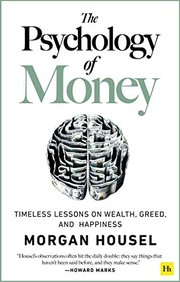 The Psychology of Money |
|---|---|---|---|
| Core thesis | Money is something you trade your life energy for. | Use your money to buy the best life experiences at the right time, instead of dying with a big unspent pile. | Doing well with money is more about behavior than intelligence. |
| Best for | People who want to align spending with their values and gain financial independence. | Diligent savers who struggle to spend on what matters. | Anyone who wants a healthier relationship with money. |
| Problems it solves | Money Stress, Purpose & Meaning | Money Stress, Purpose & Meaning | Money Stress, Investing |
| Lessons | 2 | 3 | 4 |
| Year | 1992 | 2020 | 2020 |