
Behavior beats intelligence.
How you act with money matters more than what you know. Housel shows that a humble person who saves steadily can outdo a brilliant one who makes emotional choices.
The Psychology of Money
Morgan Housel

Best for: Anyone who wants a healthier relationship with money.
2 min read · 4 lessons
Doing well with money is more about behavior than intelligence.
Morgan Housel, a financial writer, argues that doing well with money has less to do with intelligence and more to do with behavior. Short stories show how people think about greed, risk, luck and happiness.
Housel explains that everyone's financial views are shaped by their own experiences, which is why smart people make different choices. He highlights compounding, the role of luck, the importance of saving and the value of independence.
The book is short chapters, easy to read and full of practical wisdom rather than formulas.
The Psychology of Money has sold millions of copies and is often recommended as the first money book to read. Its short chapters make it easy to share.
How you act with money matters more than what you know. Housel shows that a humble person who saves steadily can outdo a brilliant one who makes emotional choices.
Most of Warren Buffett's wealth came after age 50, thanks to decades of compounding. Housel's point is that time in the market did much of the work, which is why starting early matters so much.
Plans should survive surprises. Margin of safety keeps you in the game. The goal is not to maximize returns but to stay in the game long enough to let them compound.
Endlessly chasing more can lead to risky decisions. Housel points to people who lost everything chasing more than they needed.
Wealth is money not spent. Visible spending is not the same as being rich. When you see a nice car, you learn how much someone spent, not how much they have.
Money's greatest value is the ability to control your time. Housel calls the ability to do what you want, when you want, with whom you want, the highest form of wealth.
Plan for things to go wrong. A margin of safety keeps you in the game long enough for compounding to work.
If the goalpost keeps moving, you will never feel rich. Knowing when you have enough protects you from risky moves.
Rich is the car you see. Wealth is the money not spent. Real wealth is mostly invisible.
Pick a strategy you can actually stick with through crashes, even if a spreadsheet says another is slightly better.
Anyone who wants a healthier relationship with money.
You want detailed investing instructions.
The book is light on specific how-to steps and draws mainly on US examples.
| Book | The Psychology of Money Morgan Housel 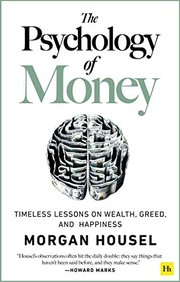 The Psychology of Money | The Little Book of Common Sense Investing John C. Bogle The Little Book of Common Sense Investing | I Will Teach You to Be Rich Ramit Sethi I Will Teach You to Be Rich |
|---|---|---|---|
| Core thesis | Doing well with money is more about behavior than intelligence. | Low-cost index funds beat most active investors over time. | Automate your finances and spend extravagantly on what you love. |
| Best for | Anyone who wants a healthier relationship with money. | Beginning investors and anyone tired of trying to beat the market. | People in their twenties and thirties getting their finances in order. |
| Problems it solves | Money Stress, Investing | Investing, Money Stress | Money Stress, Investing |
| Lessons | 4 | 3 | 3 |
| Year | 2020 | 2007 | 2009 |