
Own the whole market.
Index funds hold nearly all stocks in a market, giving you its return. You give up the chance to beat the market, but you also avoid the far more common outcome of trailing it.
The Little Book of Common Sense Investing
John C. Bogle
Best for: Beginning investors and anyone tired of trying to beat the market.
1 min read · 3 lessons
Low-cost index funds beat most active investors over time.
John Bogle founded Vanguard and introduced the first index fund for individual investors. In this short book, he makes the case for buying broad, low-cost index funds and holding them for the long term.
Bogle explains that investors as a group earn the market's return minus costs. Because active managers charge higher fees and trade more, most of them underperform index funds over time.
He shares historical data and plain explanations, and warns against chasing past performance or trying to time the market.
Bogle's ideas reshaped the investing industry, and index funds now hold trillions of dollars. This book is the clearest summary of his philosophy.
Index funds hold nearly all stocks in a market, giving you its return. You give up the chance to beat the market, but you also avoid the far more common outcome of trailing it.
Fees and trading costs compound over decades and reduce returns. Bogle called it the tyranny of compounding costs. A 1 or 2 percent fee can take a huge share of your returns over a lifetime.
Over long periods, most actively managed funds trail the index. Bogle cited data showing that funds that beat the index in one period rarely kept it up in the next.
Past winners often fail to repeat. Last year's hot fund often attracts money just before it cools off.
Jumping in and out usually hurts returns. Missing just a handful of the best days in the market can badly hurt long-term results.
Invest steadily and ignore short-term noise. Bogle's own advice was to tune out the noise and let time do the work.
Instead of searching for the winning stock, buy a low-cost fund that holds nearly all of them.
Fees look small but compound over decades. Low costs are one of the few things you control.
Bogle's advice is to keep investing steadily and avoid reacting to market swings.
Beginning investors and anyone tired of trying to beat the market.
You want to learn stock picking or trading.
The book argues strongly for index funds only, and its data focuses on the US market.
| Book | The Little Book of Common Sense Investing John C. Bogle The Little Book of Common Sense Investing | The Psychology of Money Morgan Housel 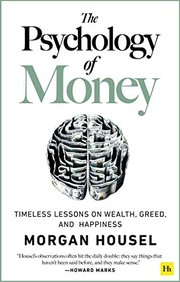 The Psychology of Money | I Will Teach You to Be Rich Ramit Sethi I Will Teach You to Be Rich |
|---|---|---|---|
| Core thesis | Low-cost index funds beat most active investors over time. | Doing well with money is more about behavior than intelligence. | Automate your finances and spend extravagantly on what you love. |
| Best for | Beginning investors and anyone tired of trying to beat the market. | Anyone who wants a healthier relationship with money. | People in their twenties and thirties getting their finances in order. |
| Problems it solves | Investing, Money Stress | Money Stress, Investing | Money Stress, Investing |
| Lessons | 3 | 4 | 3 |
| Year | 2007 | 2020 | 2009 |