
Every habit is a loop.
Identify the cue, the routine and the reward. Once you can see the loop, you can work on it.
The Power of Habit
Charles Duhigg

Best for: Readers who want to understand the science of habits in people, companies and societies.
2 min read · 4 lessons
Habits run on a cue, routine and reward loop you can rewire.
Charles Duhigg, a New York Times reporter, explains habits as neurological loops. A cue triggers a routine that delivers a reward, and with repetition the brain runs the loop on autopilot. Craving the reward is what gives habits their pull.
The book moves from individuals to organizations to whole communities. Duhigg tells how Paul O'Neill turned Alcoa around by focusing on worker safety, how Starbucks trains willpower in employees, and how Target learned to predict customer behavior from shopping patterns.
His prescription for change is to keep the old cue and reward but insert a new routine, and to back the change with belief, often supported by a group.
This book brought the science of habit formation into the mainstream and remains one of the best explanations of how habits work in individuals and organizations. Its stories, from Alcoa to Starbucks to Target, show that habits shape companies as much as people. It is a great companion to Atomic Habits, with more science and storytelling.
Identify the cue, the routine and the reward. Once you can see the loop, you can work on it.
Duhigg calls this the golden rule of habit change. It is easier to swap a routine than to erase a craving.
Test different rewards to learn what you are really craving. The urge for a snack might actually be a need for a break or a chat.
Starbucks teaches employees to plan their responses to stressful moments ahead of time, which makes self-control more automatic.
Some habits, like exercise or family dinners, set off chain reactions that improve other areas of life.
Groups like Alcoholics Anonymous show that people are more likely to keep new habits when they believe change is possible and have others around them who share that belief.
Every habit runs on the same loop. You rarely kill a habit outright. You keep the cue and the reward and swap in a different routine.
Duhigg broke his afternoon cookie habit by testing rewards. It turned out he wanted a social break, not sugar. Try different rewards until the urge goes away.
When an urge hits, write down the location, the time, your emotional state, who is around, and what you just did. The pattern shows up fast.
Some habits pull others along. Paul O'Neill turned Alcoa around by obsessing over worker safety, which forced better communication and processes everywhere else.
Readers who want to understand the science of habits in people, companies and societies.
You want a step-by-step program rather than stories.
Neuroscientists note that the cue, routine, reward loop simplifies how habits work in the brain. Some corporate stories raise privacy concerns, like Target predicting pregnancies from shopping data.
| Book | The Power of Habit Charles Duhigg  The Power of Habit | Atomic Habits James Clear 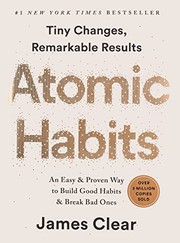 Atomic Habits | Essentialism Greg McKeown  Essentialism |
|---|---|---|---|
| Core thesis | Habits run on a cue, routine and reward loop you can rewire. | Tiny changes, repeated, compound into remarkable results. | Do less, but better, by focusing only on what truly matters. |
| Best for | Readers who want to understand the science of habits in people, companies and societies. | Anyone who wants practical, step-by-step tools to build good habits and drop bad ones. | Overcommitted people who say yes too often and feel stretched thin. |
| Problems it solves | Bad Habits, Career Growth | Bad Habits, Procrastination, Low Motivation | Burnout, Focus, Career Growth |
| Lessons | 4 | 6 | 4 |
| Year | 2012 | 2018 | 2014 |