
You can do anything, but not everything.
Trade-offs are unavoidable. Ask which problem you want to have rather than trying to have it all.
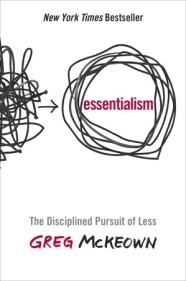
Essentialism
Greg McKeown
Best for: Overcommitted people who say yes too often and feel stretched thin.
2 min read · 4 lessons
Do less, but better, by focusing only on what truly matters.
Greg McKeown argues that the way of the essentialist is less but better. Most of what we do is not essential, yet we spread ourselves across too many commitments and make a millimeter of progress in a hundred directions.
The book has three parts. Explore means taking time to figure out what truly matters, which requires space, sleep and play. Eliminate means cutting the rest, including saying no gracefully and walking away from sunk costs. Execute means building systems and buffers so the essential work flows easily.
The underlying message is about choice. If you do not prioritize your life, someone else will.
Essentialism resonated with people burned out by always-on work culture. It is especially popular with leaders and knowledge workers who are drowning in good opportunities. The book gives you permission and tools to say no, which many readers say is the most useful skill they never learned.
Trade-offs are unavoidable. Ask which problem you want to have rather than trying to have it all.
Apply the 90 percent rule. If an option is not a clear yes, treat it as a no.
Essentialists build time to reflect, read and sleep into their schedule. Clarity rarely comes in the middle of rushing.
Separate the decision from the relationship. A kind, clear no is respected more over time than a reluctant yes.
Watch for sunk cost bias. Ask, if I were not already invested in this, how much would I invest now?
Make the essential the default with routines. Add extra time to plans so one delay does not knock everything off course.
McKeown's 90 percent rule: score any opportunity from 0 to 100 on your most important criterion. Anything below 90 becomes a zero.
Sleep, play and rest are not luxuries. They keep your judgment sharp enough to tell what matters.
Things take longer than we think. Pad your time estimates by about 50 percent so a single delay does not wreck your week.
Separate the decision from the relationship. A clear, kind no earns more respect over time than a resentful yes.
Overcommitted people who say yes too often and feel stretched thin.
You have little control over your schedule and cannot say no to work.
Critics note that saying no is easier for people with power or financial security. The book is repetitive in places.
| Book | Essentialism Greg McKeown  Essentialism | The ONE Thing Gary Keller and Jay Papasan  The ONE Thing | Make Time Jake Knapp and John Zeratsky Make Time |
|---|---|---|---|
| Core thesis | Do less, but better, by focusing only on what truly matters. | Extraordinary results come from narrowing your focus to one priority. | Choose one highlight each day, protect it from distractions and recharge your energy. |
| Best for | Overcommitted people who say yes too often and feel stretched thin. | Anyone who feels busy but not productive. | Busy people who want simple, flexible tactics. |
| Problems it solves | Burnout, Focus, Career Growth | Focus, Procrastination, Career Growth | Focus, Procrastination, Burnout |
| Lessons | 4 | 3 | 3 |
| Year | 2014 | 2013 | 2018 |