
Effort counts twice.
Talent times effort gives you skill. Skill times effort gives you achievement. Someone with less talent who keeps going will often pass someone gifted who stops.
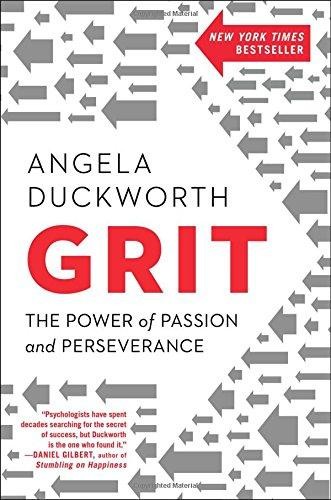
Grit: The Power of Passion and Perseverance
Angela Duckworth
Best for: Students, parents, athletes and anyone tempted to quit too early.
2 min read · 4 lessons
Sustained passion and persistence predict success more than raw talent.
Angela Duckworth, a psychologist at the University of Pennsylvania, studied West Point cadets, spelling bee finalists, salespeople and teachers to understand who succeeds over the long haul. Again and again, the best predictor was not talent or IQ but grit: passion and perseverance for long-term goals.
She breaks grit into pieces anyone can work on. Interest gets discovered and developed, rarely found fully formed. Practice means deliberate practice, focused on weaknesses with feedback. Purpose connects your work to other people. Hope is the belief that effort can improve your future.
The book also covers how parents, coaches and organizations grow grit in others, mainly by being both demanding and supportive at the same time.
Grit put a name to something coaches and teachers had long noticed: the people who go furthest are often the ones who keep going longest. Duckworth's Grit Scale has been used in schools and organizations worldwide. Researchers still debate how different grit is from conscientiousness, but the practical message, that sustained effort on one direction compounds, is useful for anyone.
Talent times effort gives you skill. Skill times effort gives you achievement. Someone with less talent who keeps going will often pass someone gifted who stops.
Most experts started with casual interest, then deepened it over years. Waiting to discover your one true passion can keep you from building one.
Pick a specific weakness, work on it with full focus, get feedback and repeat. It is uncomfortable, which is exactly why it works.
Grittier people more often see their work as helping others. That sense of purpose sustains effort when interest fades.
Hope here is not wishing. It is believing your effort can change outcomes, which you can strengthen by learning that setbacks are temporary and fixable.
Duckworth calls the best parenting style wise parenting: warm and caring while still holding high standards. The same balance works for coaches and bosses.
Duckworth's formula: talent times effort equals skill, and skill times effort equals achievement. Talent helps once. Effort pays off at both steps.
Set a stretch goal just past your current level, give it full concentration, get immediate feedback, then repeat and refine. Hours alone do not build mastery.
In Duckworth's house everyone does one hard thing that needs daily practice, picks it themselves, and cannot quit until a natural stopping point like the end of a season.
Gritty people have a single top-level goal. The smaller goals underneath are flexible, so when one fails they swap it out without abandoning the mission.
Students, parents, athletes and anyone tempted to quit too early.
You want a deep scientific debate on personality traits.
Researchers have argued that grit overlaps heavily with conscientiousness and predicts success less than the book implies. Critics also say it can underplay money, opportunity and other structural factors.
| Book | Grit: The Power of Passion and Perseverance Angela Duckworth  Grit: The Power of Passion and Perseverance | Mindset: The New Psychology of Success Carol S. Dweck  Mindset: The New Psychology of Success | The Obstacle Is the Way Ryan Holiday  The Obstacle Is the Way |
|---|---|---|---|
| Core thesis | Sustained passion and persistence predict success more than raw talent. | Believing ability can grow changes how hard you try and how you handle failure. | Every obstacle holds the material for moving forward. |
| Best for | Students, parents, athletes and anyone tempted to quit too early. | Parents, coaches, managers and anyone who freezes up when they might fail. | People facing a setback who want a practical, Stoic way through it. |
| Problems it solves | Low Motivation, Career Growth, Procrastination | Low Motivation, Self-Criticism, Career Growth | Stress & Anxiety, Overthinking, Low Motivation |
| Lessons | 4 | 4 | 3 |
| Year | 2016 | 2006 | 2014 |