
Balance challenge and skill.
Flow lives where a task stretches you slightly. As your skills grow, raise the challenge to stay in the zone.
Flow: The Psychology of Optimal Experience
Mihaly Csikszentmihalyi
Best for: Anyone who wants to feel more absorbed and fulfilled in work and life.
1 min read · 3 lessons
Happiness peaks when you are fully absorbed in a challenging activity.
Mihaly Csikszentmihalyi spent years interviewing artists, athletes, surgeons and factory workers about their best moments. He found a common state he called flow: complete absorption in an activity, where time seems to vanish and the work feels rewarding in itself.
Flow happens when a clear goal, immediate feedback and a challenge that matches your skill come together. Too easy and you are bored. Too hard and you are anxious. In the channel between, attention locks in.
His bigger argument is that happiness is not something that happens to us. We create it by controlling our attention and shaping daily experiences, including work, relationships and even hardship, into chances for flow.
Flow is one of the most cited psychology books ever, and the term is now part of everyday language in sports, gaming, design and business. Its lasting insight is that happiness is less about leisure and more about engagement. Many readers find their best moments come from challenge, not rest.
Flow lives where a task stretches you slightly. As your skills grow, raise the challenge to stay in the zone.
Know exactly what you are trying to do in each moment. Vague goals scatter attention.
You need to know how well you are doing as you go. Build ways to measure progress into the task.
Turn dull tasks into challenges with rules, targets or personal records. Attention follows engagement.
Where you put your attention shapes your experience. Training focus is training your quality of life.
Conversations, chores, hobbies and jobs can all produce flow when approached with goals, focus and feedback.
Too easy and you get bored. Too hard and you get anxious. Flow lives in the narrow channel where the task stretches you a little.
Flow needs to know what winning looks like and whether you are on track. Build both into your work.
Csikszentmihalyi describes workers who made boring tasks absorbing by timing themselves and chasing personal bests. Add rules and you add engagement.
Anyone who wants to feel more absorbed and fulfilled in work and life.
You want a quick, practical guide.
The book is academic and dense, and practical applications take work to extract.
| Book | Flow: The Psychology of Optimal Experience Mihaly Csikszentmihalyi Flow: The Psychology of Optimal Experience | Deep Work Cal Newport 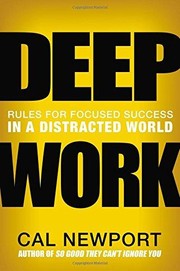 Deep Work | Digital Minimalism Cal Newport 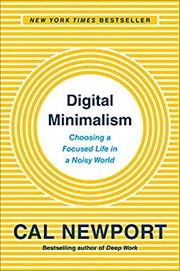 Digital Minimalism |
|---|---|---|---|
| Core thesis | Happiness peaks when you are fully absorbed in a challenging activity. | Focused, distraction-free work is rare, valuable and trainable. | Use technology on purpose instead of by default. |
| Best for | Anyone who wants to feel more absorbed and fulfilled in work and life. | Knowledge workers, students and creators who want to produce work that matters. | Anyone who feels their phone is running their life. |
| Problems it solves | Focus, Low Motivation, Purpose & Meaning | Focus, Procrastination, Career Growth | Focus, Stress & Anxiety, Bad Habits |
| Lessons | 3 | 4 | 3 |
| Year | 1990 | 2016 | 2019 |