
Deep work is valuable and rare.
It lets you learn hard things quickly and produce at an elite level. Few people protect time for it, which makes it a competitive advantage.
Deep Work
Cal Newport
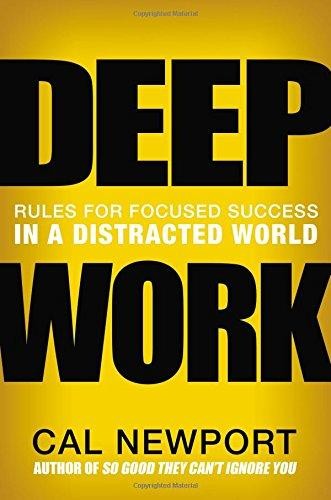
Best for: Knowledge workers, students and creators who want to produce work that matters.
2 min read · 4 lessons
Focused, distraction-free work is rare, valuable and trainable.
Cal Newport defines deep work as professional activity done in distraction-free concentration that pushes your abilities to their limit. Shallow work is everything else: email, meetings and busywork done while distracted.
His argument is economic. Deep work is becoming rarer just as it is becoming more valuable, so people who can do it will thrive. The first half makes that case. The second half gives four rules: work deeply, embrace boredom, quit social media and drain the shallows.
Newport is practical. He offers multiple ways to schedule depth, rituals to make it easier and strategies to shrink shallow obligations.
Deep Work arrived just as smartphones and open offices made focus harder than ever. It gave knowledge workers a vocabulary and a plan to protect their attention. Many readers credit it with changing how they schedule their days, and companies have used it to rethink meetings and messaging.
It lets you learn hard things quickly and produce at an elite level. Few people protect time for it, which makes it a competitive advantage.
Choose a depth philosophy and put deep work on your calendar. It will not happen by accident.
Decide where you will work, how long, how you will measure progress and what support you need, like coffee or a walk first.
Constant distraction trains your brain to crave novelty. Practice resisting it so focus becomes easier.
Keep a tool only if its benefits clearly outweigh its costs for your most important goals.
Schedule every minute of your workday in blocks, measure how much shallow work you do and set a budget for it.
Monastic: cut off almost everything. Bimodal: go deep for days at a time. Rhythmic: the same deep block daily. Journalistic: grab depth whenever a gap appears. Choose one on purpose.
Review your tasks, plan tomorrow, then say a set phrase like 'shutdown complete'. It tells your brain work is closed, so evenings actually recharge you.
Instead of taking breaks from focus, take breaks from distraction. Decide in advance when you will check email and the web and stay offline outside those blocks.
Newport cites Sophie Leroy's research: when you switch tasks, part of your attention stays stuck on the last one. A quick inbox check leaves you dumber for the next stretch.
Knowledge workers, students and creators who want to produce work that matters.
Your job requires constant real-time responsiveness.
Newport assumes a level of control over schedules that many workers do not have. Some find his advice to quit social media too absolute.
| Book | Deep Work Cal Newport  Deep Work | Indistractable Nir Eyal  Indistractable | Hyperfocus Chris Bailey Hyperfocus |
|---|---|---|---|
| Core thesis | Focused, distraction-free work is rare, valuable and trainable. | Distraction is mostly an escape from discomfort, and you can manage it. | Your attention is limited, so choose deliberately what to focus on and also let your mind wander productively. |
| Best for | Knowledge workers, students and creators who want to produce work that matters. | Anyone who keeps picking up their phone without meaning to. | Knowledge workers who want practical focus tactics. |
| Problems it solves | Focus, Procrastination, Career Growth | Focus, Procrastination, Bad Habits | Focus, Procrastination |
| Lessons | 4 | 4 | 3 |
| Year | 2016 | 2019 | 2018 |