
Clutter is costly.
Many small digital habits add up to a big loss of time and attention. The total cost is often higher than the value.
Digital Minimalism
Cal Newport
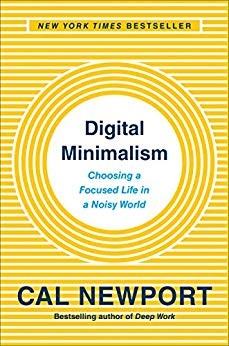
Best for: Anyone who feels their phone is running their life.
1 min read · 3 lessons
Use technology on purpose instead of by default.
Cal Newport argues that the problem with phones and social media is not just distraction. Many apps are designed to capture as much attention as possible, and small tweaks to our habits will not beat products engineered to be compulsive.
His answer is digital minimalism: a philosophy of using a small number of carefully chosen tools that strongly support things you value, and happily missing out on everything else.
The book includes a 30-day digital declutter and a set of practices, from spending time alone to reclaiming high-quality leisure and rethinking how you socialize online.
Digital Minimalism offered a clear plan at a moment when people were questioning their phone use. Its 30-day declutter has been tried by many readers who report sleeping better, reading more and feeling calmer. It does not ask you to quit tech, only to use it on purpose.
Many small digital habits add up to a big loss of time and attention. The total cost is often higher than the value.
Step away from optional tech for a month, rediscover what you enjoy, then reintroduce only tools that pass a high bar.
Keep a tool only with rules for how and when you use it, such as checking social media from a computer once a week.
Time alone with your thoughts is necessary for clarity and creativity. Leave the phone home sometimes.
Newport suggests replacing low-effort digital interactions with real conversation, which builds stronger relationships.
Prioritize demanding activities like making things, playing music or joining clubs. They are more satisfying than scrolling.
Drop optional technologies for a month. Then add back only the ones that clearly serve something you deeply value, with rules for how you use them.
Newport argues we are starved of solitude. Go for walks without your phone and let your mind wander.
Fill the reclaimed time with demanding leisure: making things, physical activity, real conversation. Empty time gets refilled by the feed.
Anyone who feels their phone is running their life.
Your work depends heavily on social media.
A full 30-day declutter is hard for many people. Some readers feel the book is too critical of technology.
| Book | Digital Minimalism Cal Newport  Digital Minimalism | Indistractable Nir Eyal  Indistractable | Stolen Focus Johann Hari Stolen Focus |
|---|---|---|---|
| Core thesis | Use technology on purpose instead of by default. | Distraction is mostly an escape from discomfort, and you can manage it. | Our attention crisis is driven by systemic forces like technology design, stress and poor sleep, not just personal weakness. |
| Best for | Anyone who feels their phone is running their life. | Anyone who keeps picking up their phone without meaning to. | Anyone who feels their focus has been eroding. |
| Problems it solves | Focus, Stress & Anxiety, Bad Habits | Focus, Procrastination, Bad Habits | Focus, Stress & Anxiety |
| Lessons | 3 | 4 | 3 |
| Year | 2019 | 2019 | 2022 |