
Separate decisions from outcomes.
Luck affects results, so judge choices by the information and reasoning behind them.
Thinking in Bets
Annie Duke
Best for: Decision makers who want to separate luck from skill.
1 min read · 3 lessons
Life is like poker: decisions involve uncertainty and luck.
Annie Duke, a former professional poker player with graduate training in cognitive psychology, argues that life is more like poker than chess. We make decisions with incomplete information, and luck plays a role in outcomes.
One of her key ideas is resulting, judging decisions by their outcomes. A bad result does not mean a bad decision, and a good result does not mean a good one.
Duke offers tools for thinking in probabilities, reducing bias and building groups that help each other seek the truth.
Thinking in Bets is popular with business leaders and investors because it reframes decisions under uncertainty. Its concept of resulting has become common vocabulary.
Luck affects results, so judge choices by the information and reasoning behind them.
Express beliefs with degrees of confidence rather than certainty.
Imagining a bet forces you to consider how sure you really are.
Find people who will challenge your thinking and agree on norms for honest feedback.
Ask how your future self will feel about this decision to reduce impulsive choices.
Sort out what was skill and what was luck before drawing lessons.
Duke calls it resulting. A good decision can have a bad outcome thanks to luck. Judge the process, not the score.
'Wanna bet?' forces you to admit how sure you actually are and to put a number on it.
Find people who will challenge your reasoning, not just cheer your conclusions.
Decision makers who want to separate luck from skill.
You dislike poker examples or want a technical decision science book.
Some readers find the poker stories repetitive and the core idea stretched across the whole book.
| Book | Thinking in Bets Annie Duke Thinking in Bets | Thinking, Fast and Slow Daniel Kahneman 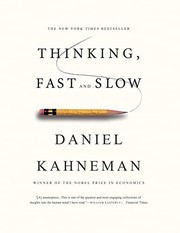 Thinking, Fast and Slow | The Scout Mindset Julia Galef The Scout Mindset |
|---|---|---|---|
| Core thesis | Life is like poker: decisions involve uncertainty and luck. | Human judgment has predictable flaws you can learn to catch. | Seeing clearly matters more than feeling right. |
| Best for | Decision makers who want to separate luck from skill. | Anyone who makes decisions, which is everyone, especially leaders and investors. | Anyone who wants to see clearly, especially when the truth is uncomfortable. |
| Problems it solves | Decision Making, Overthinking | Decision Making, Overthinking | Decision Making, Overthinking |
| Lessons | 3 | 4 | 3 |
| Year | 2018 | 2011 | 2021 |