
Find your life's task.
Greene suggests looking back at what fascinated you as a child, since those early pulls often point to your calling.
Mastery
Robert Greene
Best for: Ambitious people in the early or middle stages of a career.
1 min read · 3 lessons
Mastery comes from finding your calling, going through a long apprenticeship and eventually developing creative intuition.
Robert Greene studies masters across history and modern fields to show the path to mastery. He argues that anyone can achieve it by following a process.
The process starts with discovering your life's task, then an apprenticeship of deep learning, then social intelligence and finally creative mastery.
Mastery gives a long-term view of skill-building and shows that greatness takes years of patient work.
Greene suggests looking back at what fascinated you as a child, since those early pulls often point to your calling.
Spend years absorbing the fundamentals with patience, choosing learning over status or pay.
A good mentor compresses decades of experience into direct feedback, which speeds up your progress.
Masters learn to read people accurately and handle office politics without losing focus on the work.
Once knowledge is deep enough, intuition becomes reliable and creative leaps start to happen.
Early in your career, choose jobs that teach you the most, even if they pay a little less.
Spend years on the fundamentals until they become second nature, which frees your mind for creativity.
Once you have solid skills, try unusual approaches and combine fields to develop your own style.
Ambitious people in the early or middle stages of a career.
You want quick productivity tips.
The book is long and relies heavily on historical anecdotes that some see as selectively told.
| Book | Mastery Robert Greene Mastery | Mindset: The New Psychology of Success Carol S. Dweck 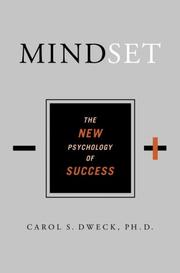 Mindset: The New Psychology of Success | Man's Search for Meaning Viktor E. Frankl Man's Search for Meaning |
|---|---|---|---|
| Core thesis | Mastery comes from finding your calling, going through a long apprenticeship and eventually developing creative intuition. | Believing ability can grow changes how hard you try and how you handle failure. | People can endure almost anything if they have a reason to live. |
| Best for | Ambitious people in the early or middle stages of a career. | Parents, coaches, managers and anyone who freezes up when they might fail. | Anyone going through a hard season or searching for purpose. |
| Problems it solves | Career Growth, Purpose & Meaning, Learning Faster | Low Motivation, Self-Criticism, Career Growth | Purpose & Meaning, Stress & Anxiety |
| Lessons | 3 | 4 | 4 |
| Year | 2012 | 2006 | 1946 |