
The world is better than we think.
Many measures, like child mortality and extreme poverty, have improved dramatically. Rosling's quizzes showed that educated audiences often scored worse than chimps picking answers at random.
Factfulness
Hans Rosling with Ola Rosling and Anna Rosling Rönnlund
Best for: Anyone who feels the world is getting worse and wants the data.
2 min read · 3 lessons
The world is better than we think, and data proves it.
Hans Rosling, a Swedish physician and statistician, found that most people, including experts, do worse than random guessing on basic questions about global trends in health, poverty and education.
He explains that our views are distorted by ten dramatic instincts, like seeing the world as divided into rich and poor, focusing on bad news and assuming trends follow straight lines.
Written with his son Ola Rosling and daughter-in-law Anna Rosling Rönnlund, the book uses data and stories to show a world that is improving in many ways, while still facing serious problems.
Factfulness was praised by readers including Bill Gates, who gave copies to college graduates. It offers a data-driven antidote to doom-heavy news.
Many measures, like child mortality and extreme poverty, have improved dramatically. Rosling's quizzes showed that educated audiences often scored worse than chimps picking answers at random.
Most people and countries are in the middle, not at extremes. Rosling suggested thinking in four income levels instead of two, which matches the real world far better.
Bad news gets more attention, and gradual improvements are rarely reported. When you hear bad news, ask whether a positive version of the same story would ever have been reported.
Trends often curve or level off. Population growth, for example, is slowing as families get smaller, not climbing forever.
Pressure to act now can lead to poor decisions. Take a breath and look at data. Rosling warned that fear plus urgency is the recipe for drastic, poorly thought-out action.
Things can still be bad while improving. Keeping both ideas in mind lets you be hopeful without being complacent.
Rosling says both are true at once for many global problems. Bad news is more likely to reach you than slow improvement.
We love dividing the world into two groups. Most people and countries actually sit in the middle.
Trends curve, level off and reverse. Projecting a line forward forever is a classic mistake.
Anyone who feels the world is getting worse and wants the data.
You want an in-depth look at specific global crises.
Some critics argue it underplays serious risks like climate change and inequality in its push for a hopeful view.
| Book | Factfulness Hans Rosling with Ola Rosling and Anna Rosling Rönnlund Factfulness | Thinking, Fast and Slow Daniel Kahneman 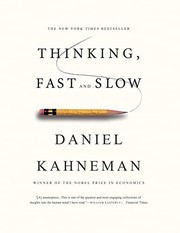 Thinking, Fast and Slow | Superforecasting Philip E. Tetlock and Dan Gardner Superforecasting |
|---|---|---|---|
| Core thesis | The world is better than we think, and data proves it. | Human judgment has predictable flaws you can learn to catch. | Good forecasting is a learnable skill, not a gift. |
| Best for | Anyone who feels the world is getting worse and wants the data. | Anyone who makes decisions, which is everyone, especially leaders and investors. | Analysts, investors, leaders and anyone who wants to predict better. |
| Problems it solves | Decision Making, Stress & Anxiety | Decision Making, Overthinking | Decision Making |
| Lessons | 3 | 4 | 3 |
| Year | 2018 | 2011 | 2015 |