
Capture everything.
Write down every idea, task and commitment the moment it shows up. If it lives only in your head, it will keep nagging you.
Getting Things Done
David Allen
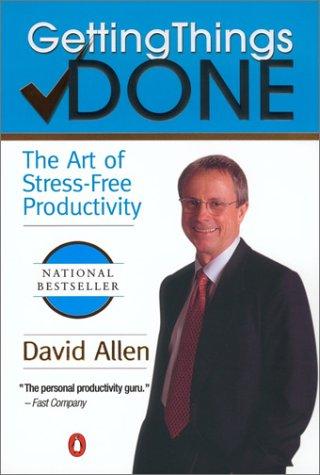
Best for: Busy professionals drowning in to-dos, email and open loops.
2 min read · 4 lessons
A clear mind comes from capturing everything in a trusted system.
David Allen's book is a complete workflow for managing everything on your plate. His core claim is that stress comes from open loops, commitments you have made but not captured or clarified, which your mind keeps reminding you about at the worst times.
The method has five steps. Capture everything in trusted inboxes. Clarify what each item is and what the next action is. Organize items into lists by context and type. Reflect with a weekly review. Then engage by choosing what to do based on context, time, energy and priority.
The goal Allen describes is a mind like water: calm, ready and responsive because nothing important is hiding in your head.
GTD has a devoted following among executives, engineers and writers, and many productivity apps are built around its ideas. Its lasting value is the insight that your brain is a poor storage system. Moving commitments into a trusted external system frees your attention for actual thinking and work.
Write down every idea, task and commitment the moment it shows up. If it lives only in your head, it will keep nagging you.
For each item ask: is it actionable? If yes, what is the very next physical step? This turns vague worries into things you can do.
If something takes less than two minutes, do it now. It is faster than tracking it.
Group actions by where or how you can do them, such as calls, errands or computer. Then you can work through a list efficiently.
Anything that takes more than one step is a project. Listing them all keeps big commitments from falling through the cracks.
Once a week, empty inboxes, update lists and look ahead. It is what keeps the system trusted and current.
Your mind is for having ideas, not holding them. Capture every open loop in a trusted inbox so your brain can stop rehearsing it.
Tracking a tiny task costs more than just finishing it. Anything quick gets done the moment you process it.
'Plan the party' is a project, not a task. 'Text Sam to ask about the date' is something you can actually do. Vague items rot on lists.
Once a week, clear your inboxes, update your lists and look at what is coming. It is the habit that keeps the whole system trustworthy.
Busy professionals drowning in to-dos, email and open loops.
Your work is simple and you already feel on top of your tasks.
Setting up the full system takes time, and some readers abandon it under the overhead. Early editions had dated paper examples, though the 2015 update helped.
| Book | Getting Things Done David Allen  Getting Things Done | The ONE Thing Gary Keller and Jay Papasan  The ONE Thing | Eat That Frog! Brian Tracy Eat That Frog! |
|---|---|---|---|
| Core thesis | A clear mind comes from capturing everything in a trusted system. | Extraordinary results come from narrowing your focus to one priority. | Do your most important, most dreaded task first thing every day. |
| Best for | Busy professionals drowning in to-dos, email and open loops. | Anyone who feels busy but not productive. | Procrastinators who want simple tactics. |
| Problems it solves | Procrastination, Stress & Anxiety, Focus | Focus, Procrastination, Career Growth | Procrastination, Focus |
| Lessons | 4 | 3 | 3 |
| Year | 2001 | 2013 | 2001 |